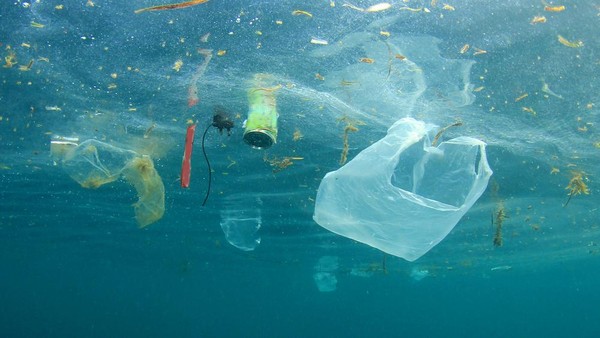

TIMESASIANews.com | The Ocean Conservancy withdrew its report entitled ‘Stemming The Tide’ which stated that countries in East and Southeast Asia are the largest producers of plastic waste pollution in the oceans.
It turned out that the narrative they made based on research from a researcher from the University of Georgia, Jenna Jambeck, was wrong and the environmental NGO from the United States apologized.
The research, which was published in the journal Science on February 12, 2015, became a hot topic of discussion among the government and environmental NGOs in Indonesia.
This is because Jambeck included Indonesia in the top five biggest contributors of plastic waste to the oceans in the order of China, Indonesia, the Philippines, Vietnam and Sri Lanka.
Previously, Jambeck was invited by the United States Embassy to Indonesia in June 2017 to disseminate the results of his research.
While in Indonesia, Jambeck spoke to a number of environmental NGOs, such as Walhi, the Indonesian Plastic Bag Diet Movement (GIDKP), Bali Fokus Foundation, and the Indonesian Zero Waste Alliance (AZWI), academics and the media.
Jambeck’s research is what Ocean Conservancy is promoting and campaigning for through the report ‘Stemming The Tide’. The report also makes incineration and waste-to-energy technology as solutions to overcome the plastic waste crisis. Published in September 2015, ‘Stemming The Tide’ was denounced as ‘waste colonialism’ by various environmental, health and social justice groups across Asia.
On July 10, 2022, in a press release on its website, Ocean Conservancy publicly apologized for being unfair to the five countries. They admit that the narrative that the five countries in Asia are responsible for the production of plastic waste in the ocean has ignored the role of developed countries in terms of excess plastic production, as well as the export of waste to developing countries under the guise of trade.
“This unprecedented retraction is an opportunity to end decades of waste colonialism,” said Asia-Pacific Coordinator Gaia Froilan Grate, an alliance of 800 waste reduction groups in 90 countries. 12/2022).
According to Grate, the report is not only erroneous in blaming five Asian countries for most of its plastic pollution, it has misled governments and the public for years into thinking that burning plastic waste is the solution to the problem. Ocean Conservancy, according to him, has also underestimated the impact of burning plastic waste in terms of climate and public health.
According to The Guardian’s report, ‘Stemming the Tide’ was written by global consulting firm McKinsey with directions from a number of institutions and companies, including the World Wildlife Fund (WWF), the Coca-Cola Company, Dow Chemical, and the American Chemistry Council. This report is often cited by members of parliament and federal agencies of the United States, such as the Environmental Protection Agency (EPA).
On the other hand, the United States is a country that is said to be responsible for plastic waste in developing countries because it participates in exporting their waste under the pretext of trade. In its press release, Ocean Conservancy admits that it has failed to look at the root causes of plastic waste.
“By focusing narrowly on one region of the world (east and southeast Asia), we create a narrative about who is responsible for the ocean plastic pollution crisis, and fail to acknowledge the huge role developed countries, particularly the United States, have played and continues to play a major role in generating and exporting plastic waste to this region. This is wrong,” wrote the Ocean Conservancy
Based on a number of data, the United States ranks third among countries that contribute to plastic pollution in the oceans. This contrasts with the broad campaign the United States has succeeded in managing its plastic waste, while at the same time underlining Uncle Sam’s country’s waste footprint to developing countries. (**)