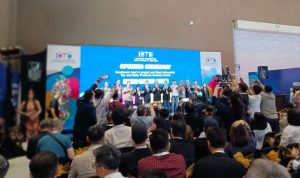
TIMESASIANews.com | At the 2022 South East Asia Genomics meeting, Indonesia is leading the development of genomics at the Southeast Asian level. Minister of Health Budi believes that biodiversity, genomic data, and Indonesia’s population are Indonesia’s capital, one of which is to provide accurate data for the future of the industrial revolution in the health sector, namely precision medicine.
“I really believe that Indonesia is in a good position to continue developing the biotechnology and genomics industry, making the health and medicine industry better in the future,” said Minister of Health Budi Gunadi Sadikin in his statement quoting Republika. Sunday (4/12/2022).
In the 1950s DNA findings sparked an industrial revolution in the health sector. Indonesia as a country with biodiversity, genome richness and large population has a strong foundation to enter this scene.
“Our goal is to advance science and services for the health of our people. Current clinical guidelines use empiric therapy, meaning everyone with the same diagnosis gets the same treatment. With genomics, we can tailor and personalize treatment for everyone towards precision medicine ,” said Budi.
Recognizing the importance and potential of using human genome technology, the Indonesian Ministry of Health has launched the first national genomics initiative through the Biomedical and Genome Science Initiative or BGSi as the foundation. It is hoped that next year the adoption of technology can already be utilized.
The second stage is to build a platform and capacity, where currently Indonesia is in the stage of increasing its sequencing capacity. In the last two years there has been an increase, where in 2020 Indonesia was only able to carry out 140 genome sequencing, but at the end of 2021 Indonesia was able to carry out 2000 genomic examinations.
“This figure is predicted to reach 8,000 to 10,000 by the end of 2022,” said Minister of Health Budi.
Through this Conference, it is hoped that it will become an arena for sharing and discussing the latest genomic activities of ASEAN member countries; transferring knowledge and innovation in the field of genomics; build strong cooperation between countries, including governments, academia, doctors and the private sector.
A total of 20 speakers attended from 7 ASEAN member countries, NIH US, ASEAN Secretariat, GISAID, Broad Institute, FIND, Duke NUS University Singapore, Gene Solution Viet Nam, Biofarma, Kura-Kura Bali Indonesia, with participants from universities, clinicians, laboratory practices , and the private sector. (**)